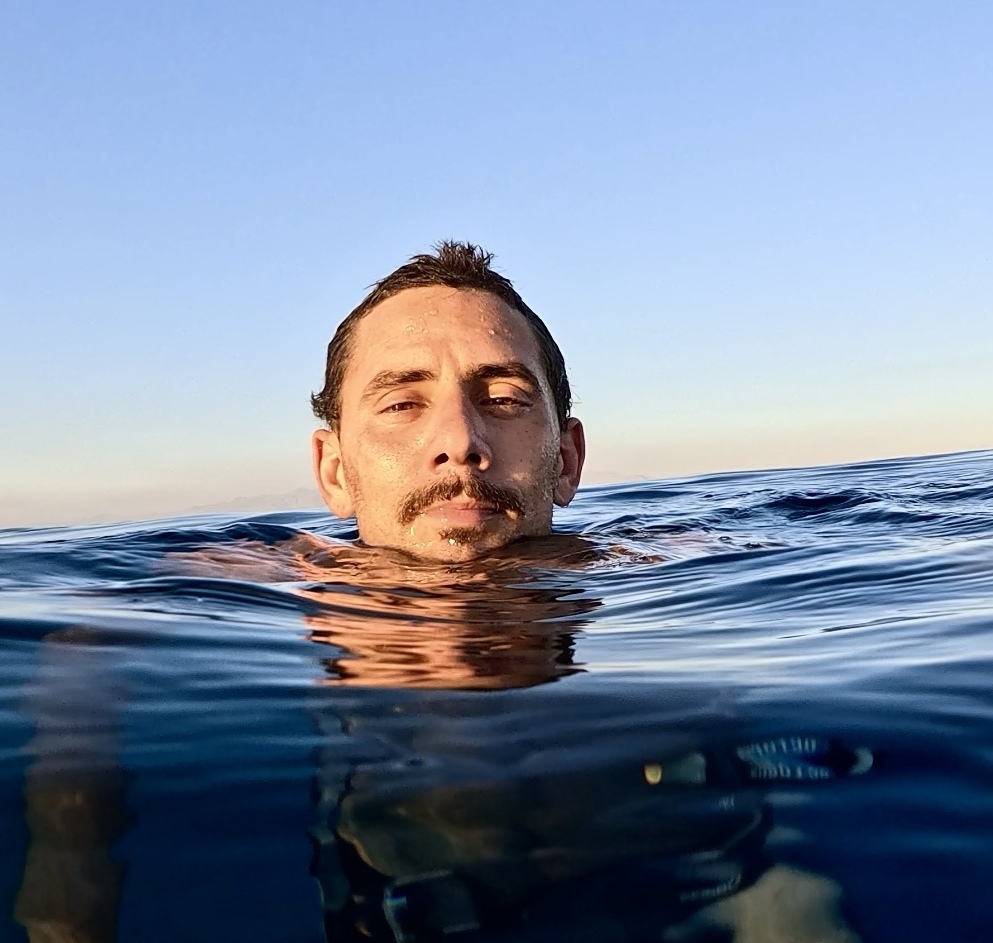
The difference isn't fitness. It's training. Specifically, it's the kind of breath hold and underwater composure training that freedivers do as a fundamental part of their sport — and that almost no surfers ever practice deliberately.
The Gap in Surf Training
Surfers train paddle fitness, wave selection, pop-ups, turns, barrels. But the one skill that matters most when things go wrong — the ability to stay calm and conserve oxygen underwater — almost nobody trains specifically.
A typical hold-down at a beach break like Blacks or Windansea lasts 10–20 seconds. At an outer reef, maybe 20–40 seconds. These aren't extreme timeframes — a moderately trained freediver can hold their breath for 3+ minutes comfortably.
The problem isn't that surfers can't physically hold their breath long enough. The problem is panic. When you're tumbling underwater, disoriented, your heart rate spikes and your oxygen consumption skyrockets.
What Freediving Training Actually Teaches You
1. Diaphragmatic Breathing
Most people breathe shallowly into their chest. Freediving training teaches full diaphragmatic breathing — using your diaphragm to pull air deep into the lower lungs where gas exchange is most efficient. In surfing terms: a better breath before a duck dive, and more oxygen reserve when you need it.
2. CO2 Tolerance
The urge to breathe isn't driven by low oxygen — it's driven by rising carbon dioxide. Through specific training exercises (CO2 tables), you teach your body to tolerate higher CO2 levels without panic. The result: that desperate "I need to breathe NOW" feeling kicks in later.
3. Relaxation Under Pressure
This is the big one. Freedivers train extensively on staying relaxed while their body sends urgent signals to surface. You learn to recognize the sensations and respond with calm rather than panic. This is exactly the skill you need during a hold-down.
4. Recovery Breathing
Freedivers use specific breathing patterns after surfacing to reoxygenate as quickly as possible. When you surface between waves in a set, knowing how to take maximally efficient breaths before the next wave hits is the difference between getting through the set and getting worked.
A Simple Training Protocol for Surfers
Dry Training (15 min, 3x/week)
Start on land. Lie down comfortably, spend 3 minutes doing slow diaphragmatic breathing (inhale 4 seconds, exhale 8 seconds), then do 4–6 breath holds with 2-minute rest intervals between each. Focus on staying completely relaxed.
Pool Training (1x/week)
In a pool with a buddy (never alone): practice static breath holds at the surface, then progress to underwater laps on a single breath. Simulate hold-down scenarios by doing breath holds after physical exertion.
Ocean Integration
During surf sessions, practice deliberate breath work before paddling out. Take 10 deep diaphragmatic breaths. When you see a set coming, take one full breath and stay relaxed as you go under.
The Bottom Line
If you surf in any conditions beyond small, clean days, you owe it to yourself to train your breath. It's the fastest way to improve your confidence in bigger surf, and it might save your life one day.
Plus, you'll probably discover that freediving itself is one of the most incredible ocean experiences available. The surfing brought you to the ocean. Freediving takes you inside it.